
Human papillomavirus (HPV) is one of the most common sexually transmitted infections in the United States, affecting both men and women. While most types of HPV do not cause health problems, certain high-risk strains can lead to serious consequences, including several types of cancer. Each year, an estimated 36,500 Americans are diagnosed with cancers caused by HPV, yet there is a safe, effective, and widely available vaccine that can prevent over 90% of these cases. Despite its proven success, HPV vaccination rates among college students remain below national health benchmarks, highlighting a crucial opportunity for campus health centers and students to work together to improve protection against this preventable disease.1
Why HPV vaccination matters
There are approximately 12 to 14 high-risk strains of HPV that are known to cause a variety of oral and genital cancers in men and women, the most prevalent being cervical cancer. The Centers for Disease Control and Prevention (CDC) strongly recommends the HPV vaccine for preteens ages 11 to 12 and for everyone through age 26 who hasn’t been vaccinated yet.2 For some adults ages 27 through 45, vaccination may still be beneficial based on individual risk factors.1 College is a particularly important time to ensure HPV vaccination, as students are able to make their own health decisions and often have convenient access to care on campus.2
HPV vaccine safety and effectiveness
The HPV vaccine has undergone extensive study and monitoring for more than 15 years and has a strong record of safety. Side effects are typically mild, such as soreness at the injection site or a low-grade fever.3 Large-scale studies consistently show that the vaccine is highly effective in preventing infections with the types of HPV that most commonly cause cancer.
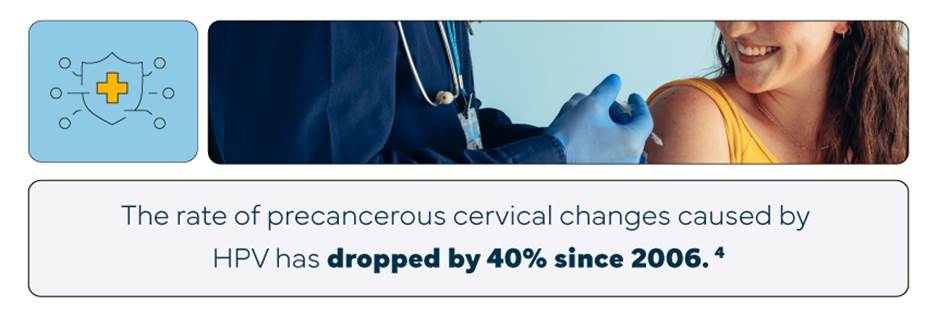
Since the introduction of the HPV vaccine in 2006, the United States has seen an 88% decrease in infections among teen girls and an 81% decrease among young adult women for the cancer-causing strains of HPV. The impact goes beyond infections: among vaccinated women, the rate of precancerous cervical changes caused by HPV has dropped by 40%.4 Notably, a study in Scotland found no cases of cervical cancer in women who were fully vaccinated at age 12 or 13.5 These results offer powerful evidence of the vaccine’s effectiveness in real-world populations.
Current vaccination rates and disparities
Despite the clear benefits, HPV vaccination rates in the U.S. are not where they need to be, especially among teens and college students. In 2022, only about 39% of children ages 9–17 had received at least one dose of the HPV vaccine.6 Among college students, a recent nationwide survey found that only 53% were up to date with the recommended HPV vaccination schedule: 41% of men and 57% of women.7 This falls significantly below the national goal of 80% coverage set by Healthy People 2030.8 These numbers show that many students remain unprotected against HPV-related cancers.
- Disparities also exist within subpopulations. For example, foreign-born students are less likely to have received the HPV vaccine compared to U.S.-born students. With nearly half of some campus populations made up of international students, targeted efforts are needed to close these vaccination gaps and ensure all students have access to potentially life-saving protection.9
Evidence-based strategies to increase HPV immunization
There is strong evidence that a combination of strategies can help raise HPV vaccination rates on campus. Wellfleet is collaborating with member schools to implement these approaches, working to improve access to resources and promote vaccination. This includes:
- Standing orders: These allow nurses, pharmacists, and other healthcare professionals to administer the HPV vaccine without a direct physician order, making it easier for eligible students to get vaccinated during routine visits or at health center pharmacies.
- Clinical decision support: Electronic health records can prompt providers to recommend the vaccine and identify students who are due for vaccination. Automated reminders can also be sent to students.
- Reminders and education: Communication campaigns through emails, posters, and digital platforms can raise awareness and dispel myths about the HPV vaccine. Providing clear, accurate information addresses vaccine hesitancy and builds trust.
- Partnerships: Collaborating with local pharmacies, clinics, and public health departments can expand access to the vaccine, especially for students who may not visit the campus health center regularly.
These interventions have been shown in research to increase vaccination rates in college and healthcare settings. By making vaccination convenient, visible, and well-communicated, students are more likely to take this important step for their health.9
Wellfleet’s Quality Improvement initiative
Recognizing the need to protect more students from HPV-related cancers, Wellfleet will launch a new Quality Improvement (QI) initiative for 2026. The initiative is working closely with campus health centers to support implementation of evidence-based strategies aimed at increasing HPV vaccination rates.
Key actions include developing easy-to-use checklists of effective interventions for campus health staff, creating engaging educational materials for students, and launching direct email campaigns to raise awareness. Through ongoing collaboration and data-driven approaches, the QI initiative aims to make HPV prevention a campus-wide priority.9,10
Take action: Protect your students and your campus
The HPV vaccine is a powerful tool to prevent cancer and safeguard the health of your students, now and for the future. For your students who haven’t completed the HPV vaccine series, now is the perfect time to act. Campus health centers can make a big difference by supporting evidence-based interventions and engaging students in conversations about vaccine safety and the importance of prevention.
Together, we can boost HPV immunization rates, reduce the risk of cancer, and build a healthier campus community for everyone.9,10
By staying informed, you can play an active role in supporting campus health initiatives and helping protect your students. Stay updated on student health trends by subscribing to the Campus Health 360 Newsletter for monthly updates.
References
- Centers for Disease Control and Prevention. (2024, July 9). Clinical Overview of HPV. Accessed on February 16, 2026. https://www.cdc.gov/hpv/hcp/clinical-overview/index.html
- Centers for Disease Control and Prevention. (2021, Nov 16). Human Papillomavirus (HPV) Vaccination: Information for Health Care Providers. Accessed on February 16, 2026. https://www.cdc.gov/vaccines/vpd/hpv/hcp/recommendations.html
- Centers for Disease Control and Prevention. (2025, Mar 6). Human Papillomavirus (HPV) Vaccine Safety. Accessed on February 16, 2026. https://www.cdc.gov/vaccine-safety/vaccines/hpv.html
- Centers for Disease Control and Prevention. (2024, July 3). Reasons to Get Vaccinated. Accessed on February 16, 2026. https://www.cdc.gov/hpv/vaccines/reasons-to-get.html
- Public Health Scotland. (2024, Jan 22). No cervical cancer cases detected in vaccinated women following HPV immunisation. Accessed on February 16, 2026. https://publichealthscotland.scot/news/2024/january/no-cervical-cancer-cases-detected-in-vaccinated-women-following-hpv-immunisation/
- Centers for Disease Control and Prevention. (2024 Feb). Human Papillomavirus Vaccination Coverage in Children Ages 9-17 Years: United States, 2022. Accessed on February 16, 2026. https://www.cdc.gov/nchs/products/databriefs/db495.htm
- Liu, C. C., Chen, A. C., Ling, J., Arcoleo, K., Liu, C., & Ammigan, R. (2026). HPV vaccination intention among unvaccinated international and domestic college students in the U.S.: A cross-sectional survey. Human vaccines & immunotherapeutics, 22(1), 2601422. https://doi.org/10.1080/21645515.20
- Office of Disease Prevention and Health Promotion. (n.d.). Healthy People 2030. Accessed on February 16, 2026. https://odphp.health.gov/healthypeople
- Jones, M., Schmuhl, N. B., Pier, J., Bradley, S., Geier, L., & Conway, J. H. (2024). Improving HPV Vaccination Rates: A Comprehensive Evaluation of a Clinician-Centered Educational Initiative in a Wisconsin Health Care System. WMJ : official publication of the State Medical Society of Wisconsin, 123(5), 344–349.
- Fu, L. Y., Smith, A., Ciotoli, C., Dannenbaum, M., & Jacobs, M. (2023). An immunization quality improvement learning collaborative in the college health setting. Journal of American college health : J of ACH, 71(8), 2612–2621. https://doi.org/10.1080/07448481.2021.197956.
WFSTU-260290
