
For the first time in recorded U.S. history, cigarette smoking among adults has fallen below 10%, with recent estimates placing current use at approximately 9.9% of adults.1 This represents a major public health milestone—one that reflects decades of sustained policy, clinical, and cultural change. For those working in college health, it is both a success story and a signal that the nicotine landscape is rapidly evolving in ways that demand renewed attention.
What led to the decline?
The decline in smoking did not happen by accident. It is the cumulative result of multiple, reinforcing interventions. High-impact public policies such as tobacco taxation, smoke-free workplace and campus laws, and advertising restrictions shifted both affordability and social norms. Clinical interventions, including expanded access to nicotine replacement therapy and behavioral counseling, improved cessation success rates. Public health campaigns reframed smoking from a social norm to a leading preventable cause of disease. Over time, these efforts contributed to a dramatic reduction in initiation, particularly among younger populations.2
College campuses have played an important role in this transformation. Smoke-free and tobacco-free campus policies, peer-led prevention programs, and integration of cessation services into student health centers have helped reduce cigarette use among young adults. Today’s students are far less likely to smoke traditional cigarettes than previous generations.
However, the story does not end with cigarettes.
New challenges emerge
Nicotine use has not disappeared—it has diversified. E-cigarettes (vaping), nicotine pouches, and other smokeless products have become dominant forms of nicotine consumption among younger populations. Among U.S. adults, e-cigarette use is now estimated at roughly 6–7%.3 Among youth, vaping remains the most commonly used tobacco product, with nearly 6% of middle and high school students reporting current use in 2024.4 College populations sit at the intersection of these trends, with studies estimating that approximately one in four college students report some level of e-cigarette use.5,6

These products present a different kind of challenge. They are often marketed as safer alternatives to cigarettes, come in appealing flavors, and are easier to conceal and use in campus environments. Nicotine pouches and other oral nicotine products further complicate detection and enforcement. While cigarette smoking has become socially stigmatized, vaping and smokeless nicotine products often occupy a more ambiguous space, sometimes perceived as acceptable or low-risk.
How should we respond?
From a population health perspective, this shift requires a reframing of strategy. Traditional tobacco control efforts focused primarily on combustion-related harm. Today, the focus must expand to nicotine dependence itself. Dual use of multiple products is increasingly common among young adults, raising concerns about sustained addiction rather than cessation.4
For college campuses, several research-backed strategies have emerged:
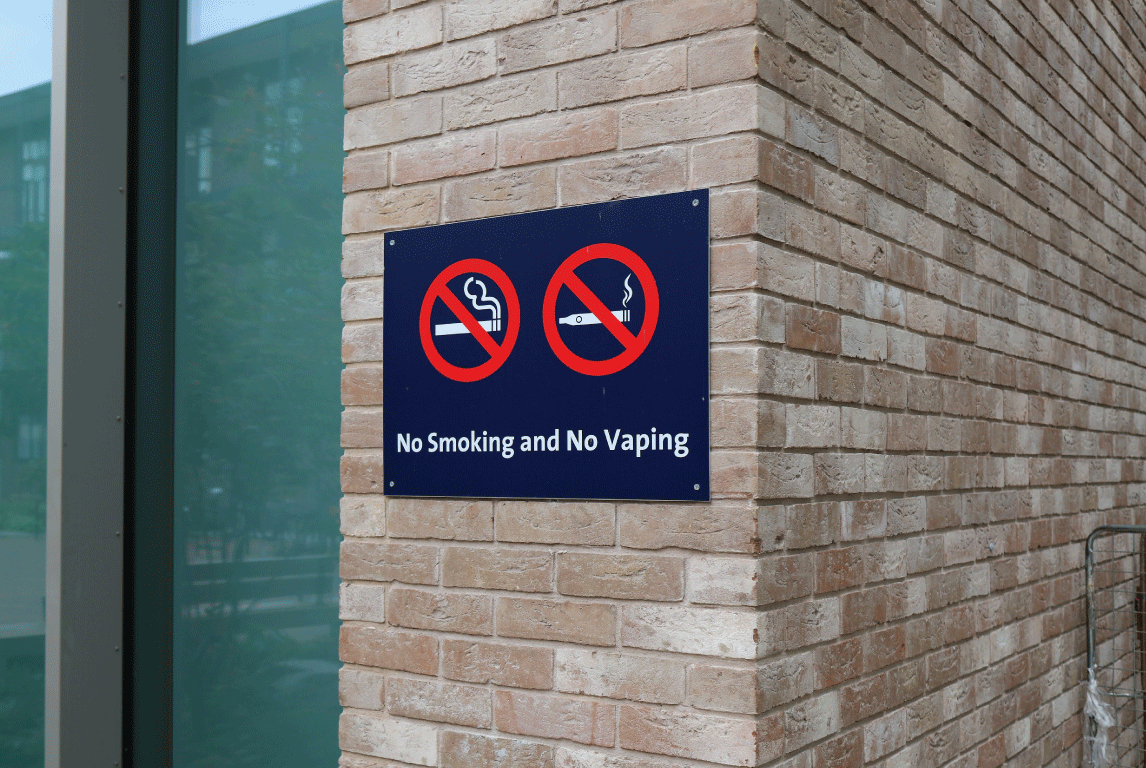
- Policy modernization: Smoke-free policies must evolve into comprehensive nicotine-free frameworks that include vaping and oral nicotine products.
- Health communication: Messaging must address misperceptions of reduced harm without unintentionally normalizing cigarette use.
- Clinical integration: Screening should explicitly include all nicotine products, with tailored cessation support for diverse product types.
- Data-driven targeting: Understanding patterns of use within specific student populations is essential for addressing disparities and emerging trends.
Crossing the 10% threshold for cigarette smoking is a milestone worth celebrating. But for college health leaders, it is not an endpoint, but rather a transition point. The next phase of tobacco control will not be defined by eliminating cigarettes alone, but by addressing a broader and more complex ecosystem of nicotine use.
The key question is no longer simply whether students smoke, but how they are using nicotine, and how we respond.
Stay informed with Campus Health 360
To keep up with evolving student health trends and strategies, subscribe to the Campus Health 360 Newsletterfor monthly updates.

References
- Centers for Disease Control and Prevention. FastStats: Cigarette smoking among adults in the United States. National Center for Health Statistics. Accessed April 24, 2026. https://www.cdc.gov/nchs/fastats/smoking.htm
- American Lung Association. (2024). Trends in tobacco use. Accessed April 26, 2026. https://www.lung.org/research/trends-in-lung-disease/tobacco-trends-brief/overall-smoking-trends
- Centers for Disease Control and Prevention. (2024). National Health Interview Survey: Tobacco product use among adults. Accessed April 26, 2026. https://www.cdc.gov/nchs/fastats/smoking.htm
- Centers for Disease Control and Prevention. (2024). Youth and tobacco use. Accessed April 26, 2026. https://www.cdc.gov/tobacco/php/data-statistics/youth-data-tobacco/index.html
- U.S. National Library of Medicine. (2025). E-cigarette use among college students: prevalence and patterns. Preventive Medicine Reports. Accessed April 26, 2026. https://pmc.ncbi.nlm.nih.gov/articles/PMC12428087/
- American College Health Association: National College Health Assessment, Spring 2025 Executive Summary. Accessed April 26, 2026.
WFSTU-260531
